Once AI builds a scene, how do you turn it into a playable game?
Emm Tee’s PaperRoute shows the work beyond a generated scene: establish a gameplay loop, then review art, characters and movement separately.
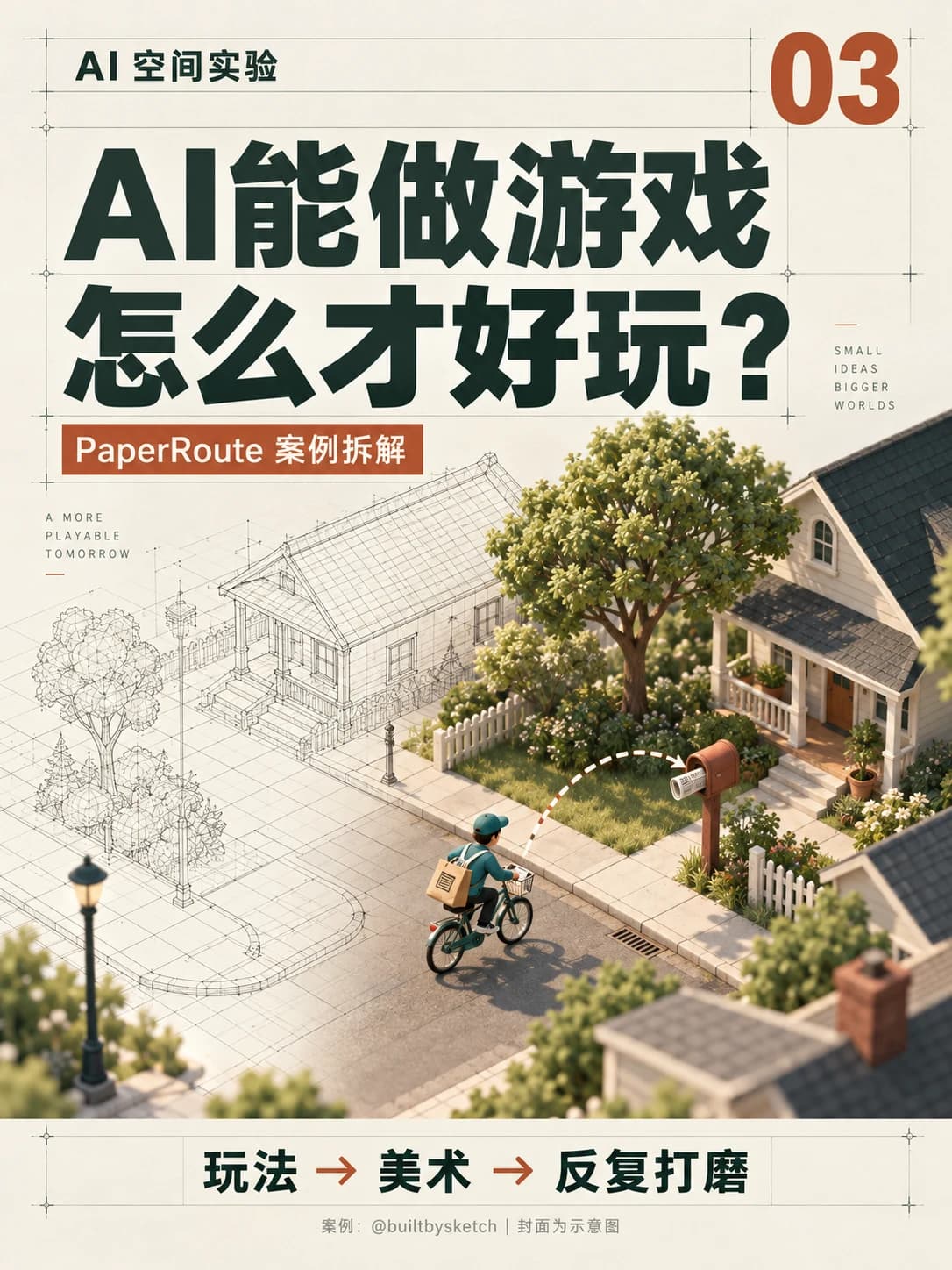
What can someone do inside the space?
After the campus and interior experiments, a new question arises: what happens once someone enters a scene?
PaperRoute, by Emm Tee / @builtbysketch, is a browser game inspired by classic newspaper-delivery gameplay. Players cycle through a neighborhood, deliver papers, face obstacles and complete a route. This article interprets the creator’s posts and retrospective; it is not our own game-development test.
Two posts, two stages of one project
The early showcase emphasized the scene and browser presentation. The creator said models, rendering and the overall look needed substantial work, later adding replies about characters, rain, broken windows, weekday progression and release.
The later retrospective expanded on requirements, gameplay, art, characters and render checks. It is valuable because it documents the work after the first generation.
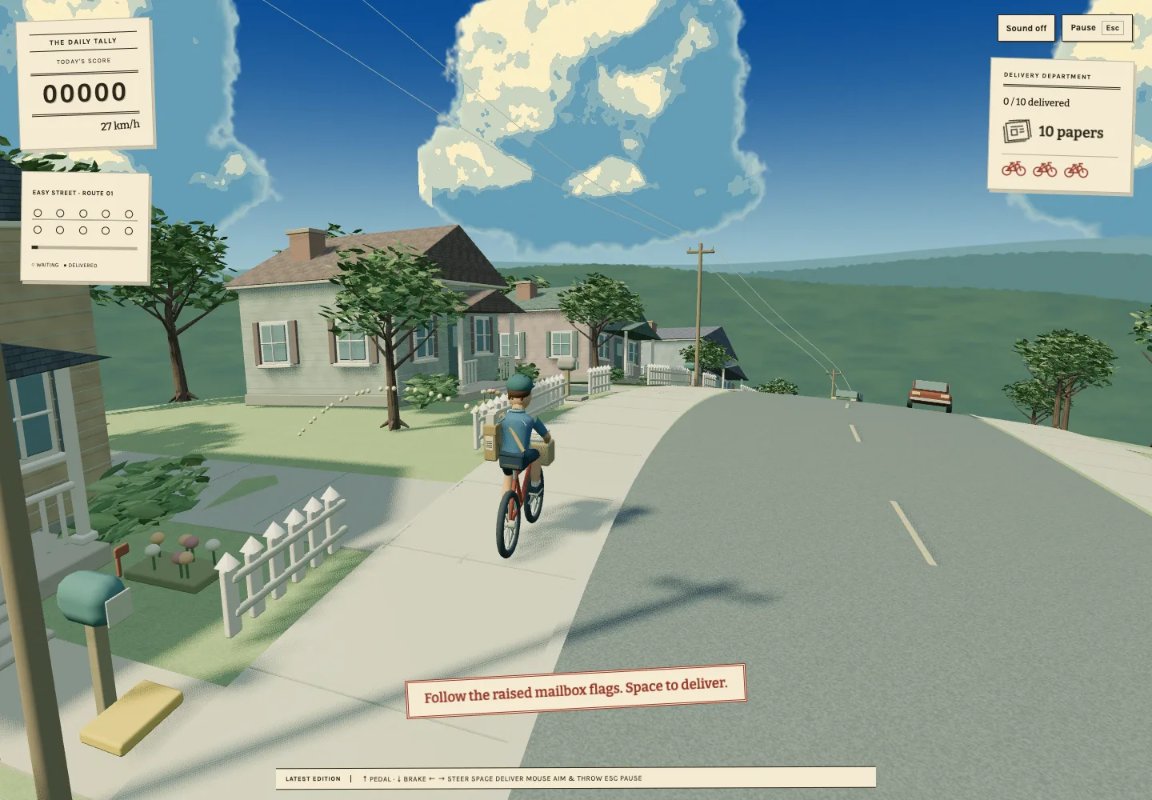

First, complete one gameplay loop
The creator described newspaper delivery and supplied a camera reference. Early work focused on cycling, throwing trajectories, mailbox scoring and a route endpoint before deeper art work.
We interpret that as connecting input, action, feedback and purpose. A delivery task could give a campus road a destination and completion signal; that is our design extension, not an existing PaperRoute campus feature.
What will a player do in thirty seconds? How will they recognize success, understand a failure and try again?
Give gameplay and art separate review criteria
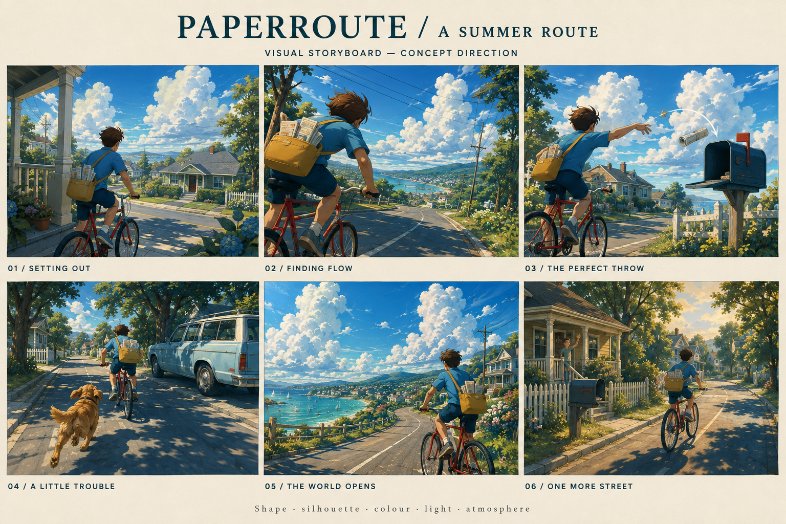
The creator used ChatGPT for concepts and style references, then Astra-generated Python executed by Blender in the background to create houses, trees, fences and mailboxes, exporting GLB assets into the browser scene. He specified that this was not an MCP interface-control workflow.
The retrospective alternates between references to a shared thread and separate conversations, but repeatedly calls for separate gameplay and art checks. Review shape when changing a building, and trajectory and scoring when changing a throw. A vague request to improve everything obscures the actual problem.

Change the tool chain when a character stalls
Scripted buildings worked better than faces for the creator. He switched to a ChatGPT character concept, a Meshy-generated mesh, then Astra and Blender for polygon reduction, corrections, rigging and bicycle adaptation.
Our lesson is to assign different jobs to different tools: concepts establish appearance, mesh generation creates an initial form, and later work makes it suitable for the game. A 3D file is only the start.
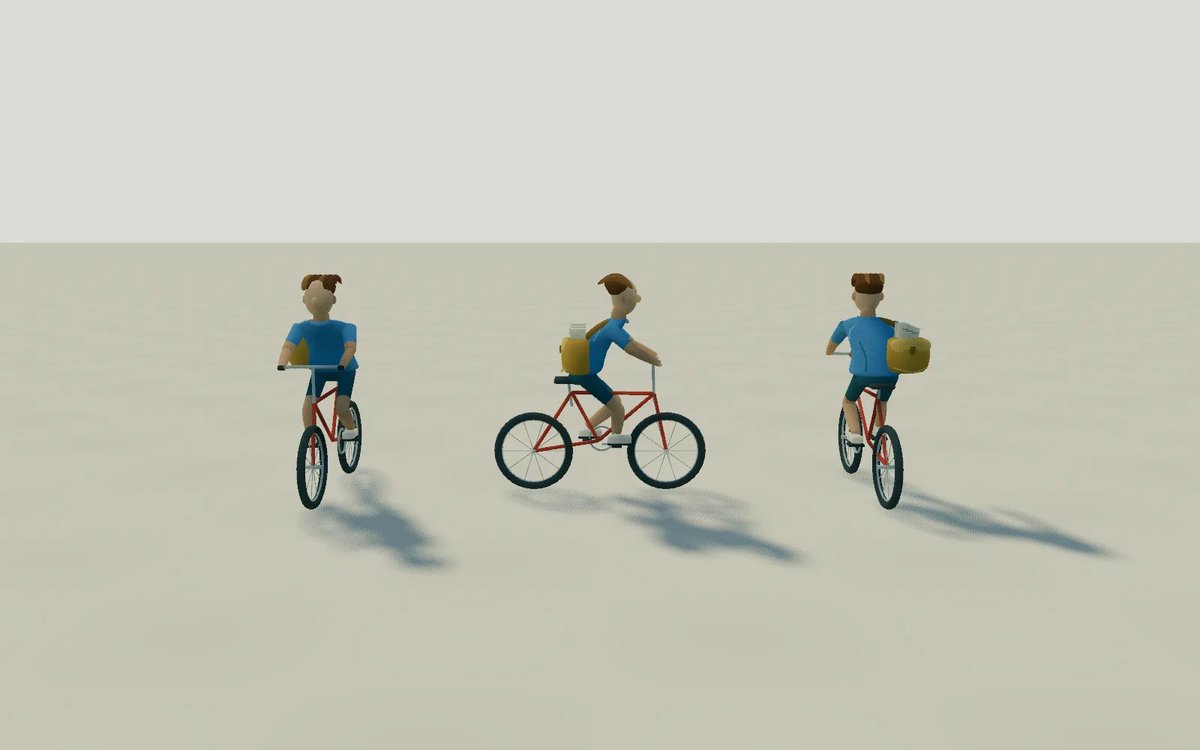

Revise problems you can actually point to
The creator reviewed front, side and rear renders plus turning, throwing, sprinting and falling poses. Revisions covered sleeves, arms, trouser cuffs, hair, handlebar contact and feet on pedals.
The same principle helps spatial work: replace “this room feels wrong” with “the chair blocks the door,” or “the campus is confusing” with “the destination disappears at this junction.” These are our examples, not PaperRoute features.
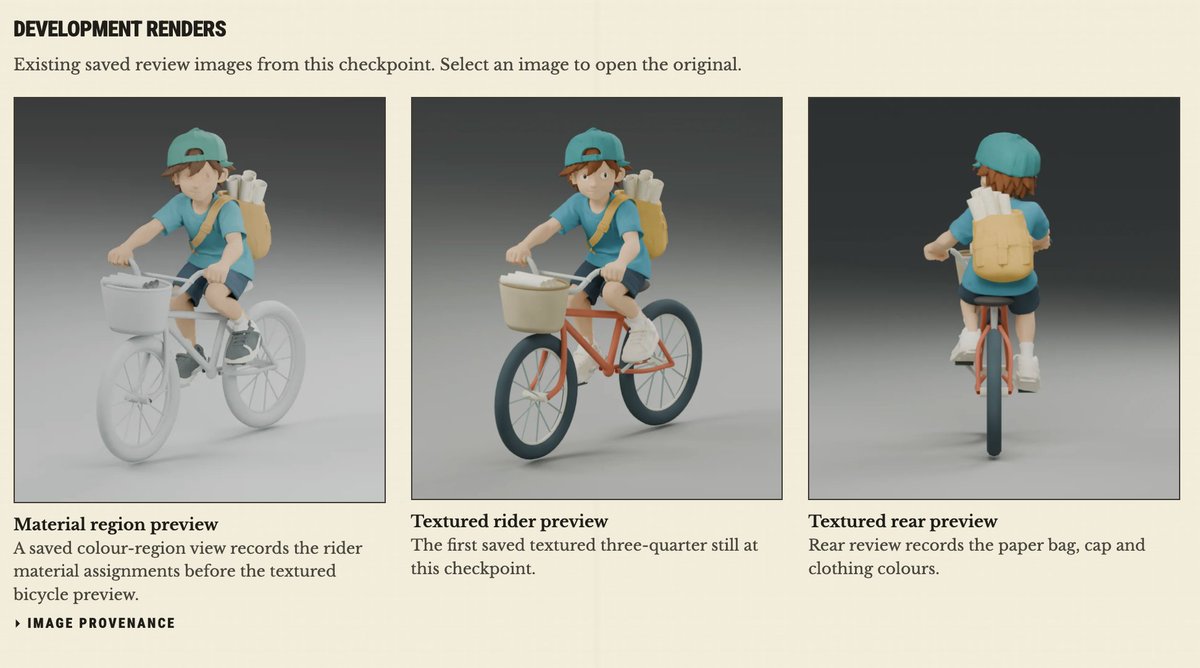

Leave time for playful details
The creator added characters, rain, broken windows and a training area, testing some experiments on separate branches before integration. He emphasized the creator’s continuing role in choices and refinement.
His statistics cover 39 hours: 25.2 attended and 13.8 agent-only. Of 1.56 billion tokens, 1.53 billion were cache reads. The $2,175 figure is an estimated API value, explicitly not his bill. The record includes early July attempts and September development, so it must not be reduced to “four days of automatic work.” Sustained 60 FPS on mobile was not sufficiently verified.
Our takeaway is a repeatable process: define a goal, establish a loop, review gameplay and art separately, inspect multiple views, and leave room for variation.
Which familiar place would you turn into a game? Describe a place, an action and a reason: finding a cat on campus, delivering papers in an old street, or following clues around a living room.
Scope of the sources
This analysis uses the public showcase, retrospective and visible replies. We did not independently recreate the development workflow or benchmark mobile performance. The original uses differing model names; we use Astra without asserting an official model version. The game site and development log are further reading, not independent test evidence.
Key Takeaways
- Connect input, action, feedback and a goal before expanding the game.
- Review gameplay and art separately, using multiple angles and action poses.
- The $2,175 figure is the creator’s API-value estimate, not an actual bill.
Related Articles
How AI interior design comes together: from Blender to real-time exploration
Thomas Ricouard’s house project connects requirements, floor plans, Blender/Python, Cycles renders and UE5 through repeated checks and revisions.
Read MoreA small-group lesson with PikaTo: classroom points, homework checks and feedback
A sample lesson workflow for preparing rules, recording participation, checking homework and reviewing feedback before sharing it with parents.
Read MoreBuild a consistent lesson-feedback routine for your teaching center
Agree on the information every feedback note needs, then use classroom and homework records to keep each student’s feedback specific.
Read More